Mount Etna is an active volcano near Catania, in Sicily — the highest active volcano in Europe, and one of the most active on earth. It covers 1,250 km² and its eruptive history goes back half a million years.
✓ July 2020 · trekking at 2,100 m
✎ A slightly unusual trip. We were there in July 2020, just after Europe's borders reopened. Between temperature checks at the airport, tests and declaration forms, few people were travelling yet: the island was strikingly quiet, and sites that are normally packed were almost deserted. The prices and access conditions described here date from that period.
✎ Its height changes, and that's the whole point. Long given as around 3,330 metres, Etna has officially stood at 3,403 metres since July 2024: the Voragine crater grew so much through successive paroxysms that it became the volcano's new high point, overtaking the North-East crater that had held the record for years. A collapse can just as easily take several metres off in seconds.
✎ Check this before you go: the volcano began erupting on 7 August 2026, and the activity was still ongoing when this article was updated. Depending on the phase, access to the higher zones is restricted or closed, and ash fall can disrupt Catania airport. Activity status is published by the INGV, Italy's national institute of geophysics and volcanology.

Mount Etna
01With or without a guide?
During our stay in Sicily we chose a trek at 2,100 metres with a guide, through Etna Emotion — the tour also included a wine tasting at an estate near the volcano. We wanted information and stories about this volcano that sits so close and so active, as well as the landscape.
✎ Above a certain altitude, a guide isn't a choice: it's compulsory. Regional rules require a licensed volcanological guide to approach the summit craters — above roughly 2,900 metres on the south side. The threshold drops when the alert level rises. Below that, as on our trek, you can walk freely.
02What the tour includes
✎ Etna's wines have their own appellation, Etna DOC. They grow on volcanic soil, sometimes above a thousand metres, from grapes found nowhere else: nerello mascalese for the reds, carricante for the whites. It's one of the highest-altitude vineyards in Europe.
03Practical tips
A relatively gentle hike, far less demanding than Mount Batur in Bali. Good shoes are still essential: the ground is ash and scoria that rolls underfoot.
✎ Stay well hydrated and bring a snack to see you through to the end.
✎ There can be fifteen to twenty degrees between Catania and the summit, whatever the season. And in winter you can ski Etna: there are two resorts on its flanks.
Enjoy the view, the shifting colours and the landscape...

Mount Etna

Mount Etna

Mount Etna

Mount Etna

Mount Etna
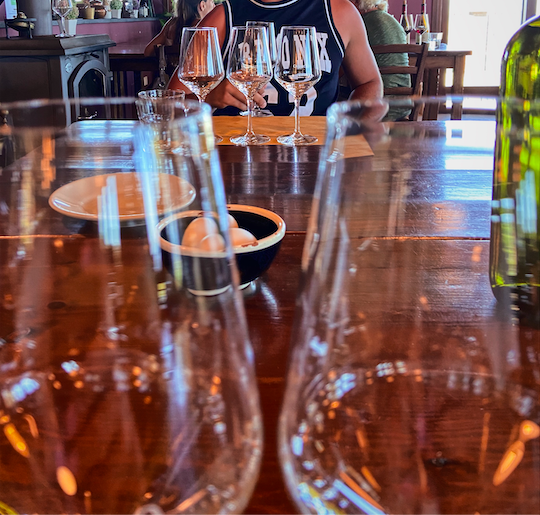
Gambini Vino
+The different access points
You don't start Etna from the plain: two road bases take you halfway up, one on each side.
✎ Etna has been a UNESCO World Heritage Site since 2013, for its geological importance: it's one of the most closely studied volcanoes in the world, and its eruptions have been documented for nearly three thousand years.
My verdict · trekking at 2,100 m
★
The trek
- A fine hike, manageable, with a guide who gives the landscape its meaning
- But looking back, I'd have liked to go higher
✓
The tasting
- Yes — for anyone who likes wine, it's always a good experience
- And it shows you a side of the island beyond the volcano
✎
If you're climbing
- Aim higher than 2,100 metres if you're fit enough
- Above about 2,900 metres, budget for a licensed guide: it's compulsory
+Read next